 HomeCostGuide
Bathroom Remodel Cost
Written and reviewed by the HomeCostGuide editorial team
Quick answer
$7k–$25k
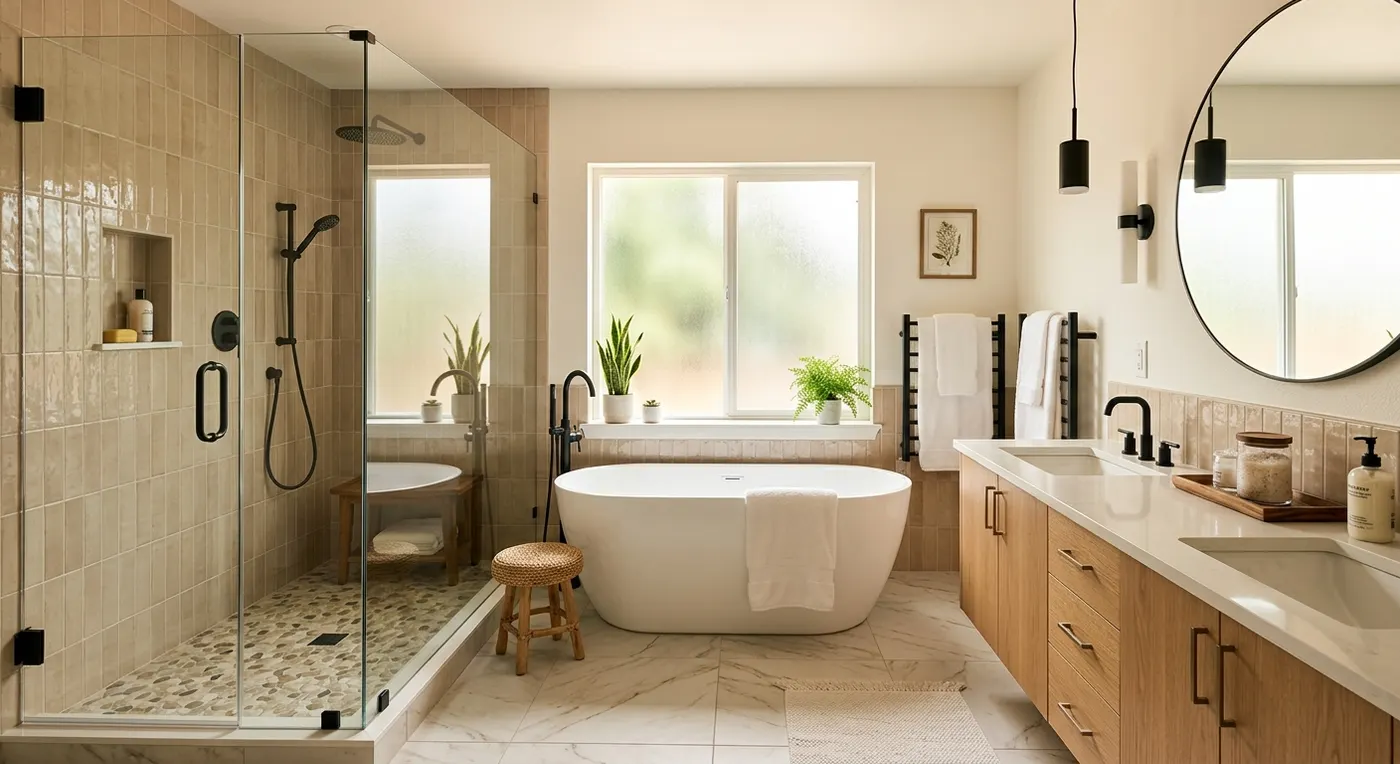
Most homeowners can expect to pay $6,500–$25,000 for a bathroom remodel. A like-for-like refresh of a small bathroom sits at the low end; a primary bathroom with a layout change and custom tile sits at the high end.
Customize this estimate
Use the Flooring Calculator with your own measurements.
Cost by project size
| Project size | Typical range |
|---|---|
Powder room refresh | $6,500–$11,000 |
Full bath, existing layout | $11,000–$18,000 |
Primary bath with layout changes Moving plumbing or expanding the footprint pushes above this range. | $18,000–$25,000 |
Cost by material
| Material | Typical range |
|---|---|
Fiberglass or acrylic tub/shower unit | $3,500–$7,000 |
Tiled shower surround | $6,000–$14,000 |
Custom walk-in tile shower | $12,000–$22,000 |
Cost per square foot
$120–$280 per sq. ft.
A national average range. Use it to sanity-check a quote against your project’s square footage — actual per-square-foot cost falls as the footprint gets larger, since fixed costs like permits and mobilization spread across more area.
Labor cost
Labor typically accounts for 40–65% of the total project cost. Labor share climbs toward the high end whenever plumbing or electrical fixtures are relocated rather than replaced in place.
Regional considerations
Labor rates in coastal metros and the Northeast typically run 15–30% above the national range; rural areas of the South and Midwest often come in below it.
Resale value
According to Zonda's annual Cost vs. Value report, a midrange bathroom remodel recoups roughly 70–80% of its cost at resale — among the higher returns of any interior project. Upscale or luxury-scope remodels typically recoup less, closer to 45–50%, since added cost outpaces what most buyers will pay extra for finishes alone. Sticking to a standard footprint and mid-tier finishes protects the higher end of that return.
What affects the price
- Layout changes
- Keeping the tub, toilet, and vanity in their existing locations avoids re-routing plumbing and is the single biggest cost lever.
- Tile scope
- A tiled shower with a niche and bench costs meaningfully more in labor than a prefabricated tub/shower insert.
- Fixture tier
- Builder-grade vs. mid-range vs. designer fixtures can shift the material budget by thousands on the same footprint.
- Permitting
- Most jurisdictions require a permit for plumbing or electrical work, adding fees and inspection time to the project.
Repair vs. replace
If the issue is cosmetic — worn grout, a dated vanity, poor lighting — a partial refresh addresses it for a fraction of a full remodel. A gut remodel makes sense when there's water damage behind the walls, failing plumbing, or the layout no longer works for the household.
DIY vs. professional
Painting, swapping a vanity or mirror, and updating hardware are reasonable DIY projects. Plumbing relocation, electrical work, and waterproofing a tiled shower should go to a licensed professional — mistakes here cause water damage that costs far more to fix later.
Ways to reduce costs
- Keep plumbing fixtures in their current locations
- Refinish an existing tub instead of replacing it
- Choose a prefabricated shower or tub unit over custom tile
- Get at least three itemized bids from licensed contractors
- Schedule during a contractor's slower season (typically late fall/winter)
Financing options
Common ways to fund a bathroom remodel include a home equity line of credit (HELOC) or home equity loan — usually the lowest rate, since it's secured by the home — a personal loan for faster, unsecured funding at a higher rate, a 0% promotional-period credit card for smaller projects, or in-house financing some contractors offer directly. Compare total cost over the loan term, not just the monthly payment.
Questions to ask contractors
- Are you licensed and insured in this state, and can I see proof?
- Who pulls the permit, and is that included in your quote?
- What is the payment schedule, and is it tied to project milestones?
- Which parts of the job are subcontracted, and who supervises them?
- What happens if you find water damage once demo starts?
Project timeline
1. Design and material selection
1–2 weeks
2. Permitting
1–3 weeks
3. Demolition
2–4 days
4. Plumbing and electrical rough-in
3–5 days
5. Tile, fixtures, and finish work
2–3 weeks
Maintenance considerations
Reseal grout and caulk annually, run the exhaust fan during and after showers to control moisture, and check under the sink for slow leaks a few times a year.
Methodology & sources
These figures come from our published cost estimation methodology, cross-referenced against the sources below. They are estimates, not quotes — actual project costs vary by location, materials, labor, and contractor.
- U.S. Bureau of Labor Statistics — Producer Price Index, construction materials
- U.S. Bureau of Labor Statistics — Occupational Employment and Wage Statistics
- U.S. Census Bureau — Survey of Construction
- U.S. Census Bureau — American Housing Survey
- Zonda — Cost vs. Value Report
Frequently asked questions
How long does a bathroom remodel take?+
A full bathroom remodel with existing plumbing typically takes 3–4 weeks from demo to finish. Layout changes or custom tile work can extend that to 6 weeks or more.
Do I need a permit to remodel a bathroom?+
Most jurisdictions require a permit for any plumbing or electrical work, even if the layout doesn't change. Cosmetic-only updates (paint, hardware) usually don't need one — check with your local building department.
Does a bathroom remodel add resale value?+
Yes — Zonda's Cost vs. Value report puts the national recoup rate for a midrange bathroom remodel at roughly 70–80%, one of the higher returns of any interior project. Upscale or luxury-scope remodels recoup less, typically 45–50%.
What's the cost per square foot for a bathroom remodel?+
Nationally, bathroom remodels run about $120–$280 per square foot for a midrange project, with budget refreshes below that range and luxury remodels well above it. Bathrooms cost more per square foot than most other rooms because plumbing, waterproofing, and ventilation are concentrated in a small space.
Can I finance a bathroom remodel?+
Yes — a HELOC or home equity loan is typically the lowest-rate option since it's secured by the home, followed by an unsecured personal loan. Smaller refreshes are sometimes covered with a 0% promotional credit card if paid off within the promo period.
Bathroom Remodel by size and type
Looking for a narrower scope? These pages break out cost for a specific size or type covered by this guide.