 HomeCostGuide
Flooring Installation Cost
Written and reviewed by the HomeCostGuide editorial team
Quick answer
$3k–$11k
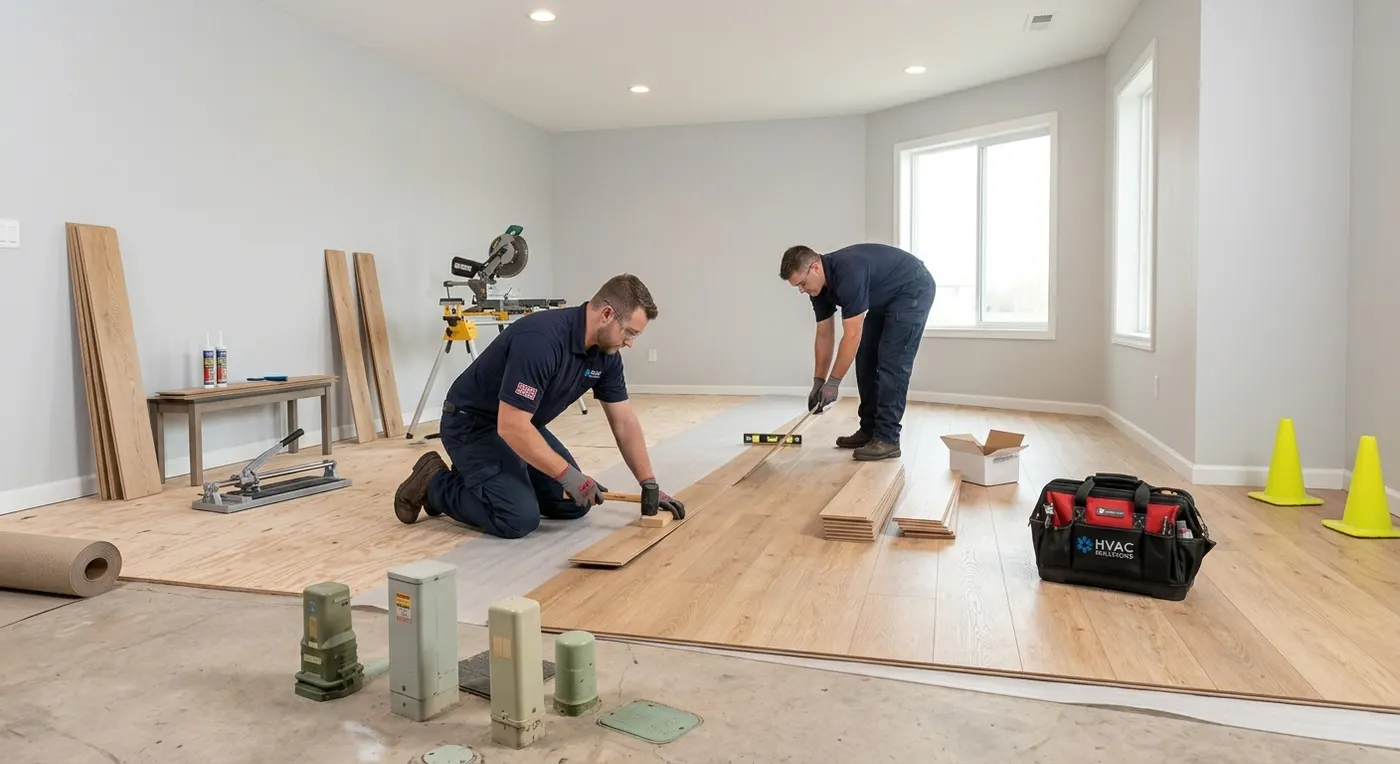
Most homeowners can expect to pay $2,800–$11,000 to install new flooring, depending on the area covered and material chosen. Use the flooring calculator to convert your own room dimensions into an estimate.
Customize this estimate
Use the Flooring Calculator with your own measurements.
Cost by project size
| Project size | Typical range |
|---|---|
Single room (~150–250 sq ft) | $2,800–$4,500 |
Multiple rooms (~600–900 sq ft) | $5,000–$8,000 |
Whole main floor (1,200+ sq ft) | $8,000–$11,000 |
Cost by material
| Material | Typical range |
|---|---|
Laminate Per sq. ft. installed, materials and labor | $3–$8 |
Vinyl / LVP Per sq. ft. installed, materials and labor | $4–$9 |
Engineered hardwood Per sq. ft. installed, materials and labor | $8–$14 |
Tile Per sq. ft. installed, materials and labor | $7–$15 |
Labor cost
Labor typically accounts for 30–50% of the total project cost. Labor share rises for nail-down hardwood, tile, and any job requiring significant subfloor repair.
Regional considerations
Removal of old flooring, subfloor prep, and stair transitions vary by home and add cost beyond the base material and install rate.
Resale value
Flooring material affects resale return more than almost any other line item in this guide. The National Association of Realtors' Remodeling Impact Report found refinishing existing hardwood floors recoups roughly 147% of its cost at resale — the highest return of any interior project it tracks — while installing new hardwood recoups around 118%. Budget materials like laminate and vinyl are more modest but still generally cost-effective; if hardwood already exists under old carpet or vinyl, refinishing it is usually the higher-return move.
What affects the price
- Material choice
- Laminate and vinyl are the most budget-friendly; solid hardwood and natural stone tile sit at the top of the range.
- Subfloor condition
- A subfloor that needs leveling, repair, or moisture mitigation adds cost before the new flooring is even installed.
- Removal and disposal
- Removing existing flooring — especially tile or glued-down materials — adds labor time and disposal fees.
- Pattern complexity
- Herringbone, diagonal, or large-format layouts take longer to install than a straight, simple pattern.
Repair vs. replace
Isolated damage — a few scratched boards, a cracked tile — can often be patched if matching material is available. Widespread wear, water damage, or a failing subfloor are signs it's time to replace rather than repair.
DIY vs. professional
Floating floors (laminate and click-lock LVP) are genuinely DIY-friendly for a careful homeowner. Nail-down hardwood, tile, and large-format or patterned installs are worth hiring a professional for.
Ways to reduce costs
- Use the flooring calculator first so you're not over- or under-ordering material
- Keep the existing subfloor if a professional confirms it's sound
- Choose a floating-floor material if you're comfortable installing it yourself
- Schedule during a contractor's slower season
- Buy materials directly and compare installation-only labor quotes
Financing options
Flooring is typically inexpensive enough relative to other remodeling projects that most homeowners pay out of pocket or use a 0% promotional card for a single room. Whole-floor or whole-home projects bundled with a larger remodel are more often rolled into that project's HELOC or renovation loan rather than financed separately.
Questions to ask contractors
- Is subfloor prep included in this quote, or billed separately if needed?
- Is removal and disposal of the old flooring included?
- Are transition strips and baseboard trim included?
- What's the warranty — on the material, the installation, or both?
- Will you moisture-test a concrete subfloor before installing over it?
Project timeline
1. Removal and subfloor prep
1 day
2. Installation
1–3 days, depending on area
3. Trim and transitions
1 day
Maintenance considerations
Sweep or vacuum regularly and follow the manufacturer's cleaning guidance for your material; solid hardwood typically needs refinishing every 7–10 years, and tile grout benefits from resealing periodically.
Methodology & sources
These figures come from our published cost estimation methodology, cross-referenced against the sources below. They are estimates, not quotes — actual project costs vary by location, materials, labor, and contractor.
- U.S. Bureau of Labor Statistics — Producer Price Index, construction materials
- U.S. Census Bureau — American Housing Survey
- National Association of Realtors — Remodeling Impact Report
Frequently asked questions
How much flooring should I order?+
Most installers recommend ordering 10% more than your measured square footage to account for cuts and waste — more for patterned layouts. The flooring calculator builds this in automatically.
Can I install flooring over my existing floor?+
Sometimes — floating floors like laminate and LVP can often go over a sound existing floor. Nail-down hardwood and tile generally require removal of the old surface and a prepared subfloor.
What flooring holds up best in kitchens and bathrooms?+
Vinyl/LVP and tile are the most water-tolerant common options and are typically preferred over solid hardwood or laminate in wet-prone rooms.
Does new flooring increase home value?+
Often, and hardwood returns the most: the National Association of Realtors' Remodeling Impact Report found refinishing existing hardwood recoups roughly 147% of cost at resale, and new hardwood around 118%. Laminate and vinyl add value more modestly but remain generally cost-effective.
Is refinishing existing hardwood cheaper than replacing it?+
Almost always, and it typically returns more at resale too. If sound hardwood already exists under carpet or old vinyl, refinishing it is usually both the lower-cost and higher-return option compared with installing a new floor.
Flooring Installation by size and type
Looking for a narrower scope? These pages break out cost for a specific size or type covered by this guide.