 HomeCostGuide
Roof Replacement Cost
Written and reviewed by the HomeCostGuide editorial team
Quick answer
$9k–$19kfor architectural asphalt shingle, average home
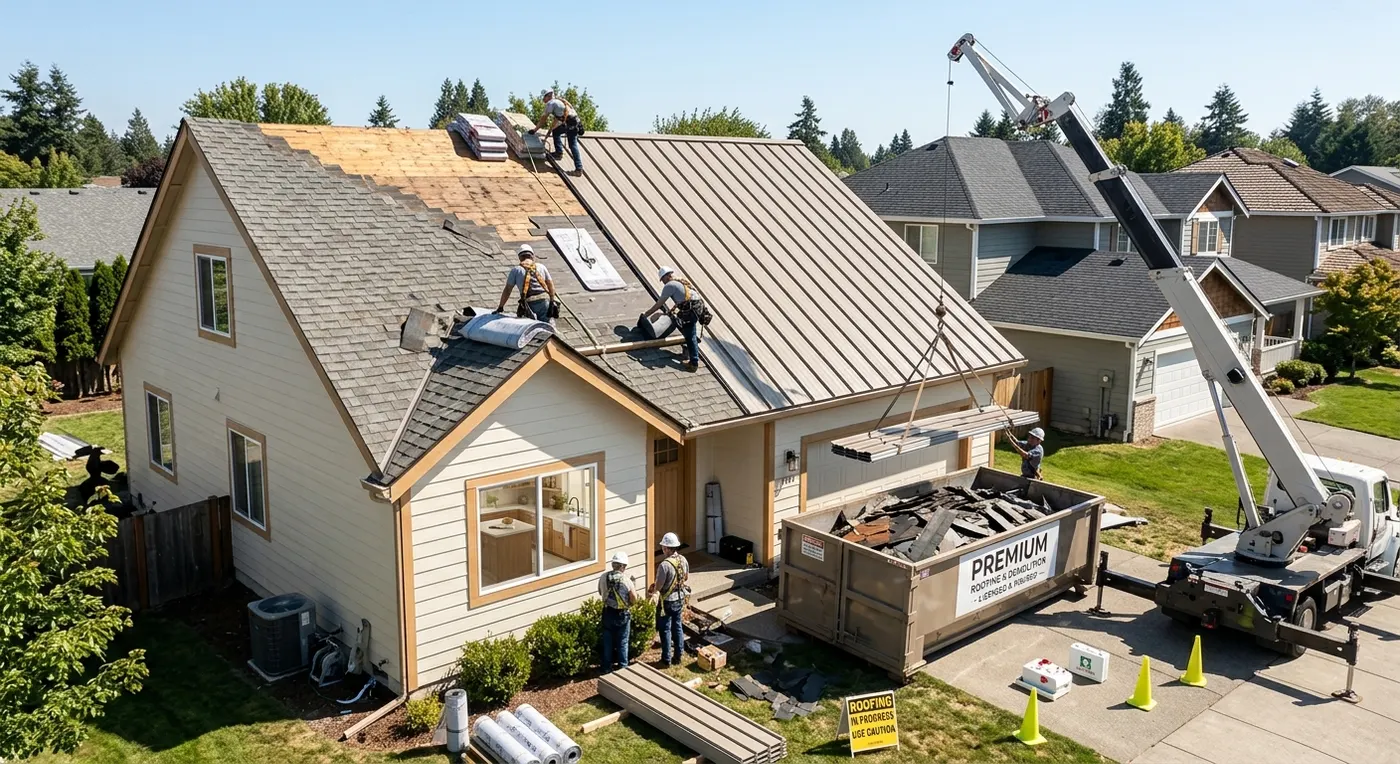
Most homeowners can expect to pay $9,200–$18,500 for a full asphalt shingle roof replacement. Roof size, pitch, and material are the biggest swing factors — metal and tile run well above this range.
Customize this estimate
Use the Roofing Calculator with your own measurements.
Cost by project size
| Project size | Typical range |
|---|---|
Small roof (~17 squares / 1,500 sq ft footprint) | $9,200–$13,000 |
Mid-size roof (~24 squares / 2,200 sq ft footprint) | $12,000–$16,000 |
Large roof (32+ squares / 3,000+ sq ft footprint) Complex rooflines with multiple valleys and dormers push above this range. | $16,000–$18,500 |
Cost by material
| Material | Typical range |
|---|---|
Architectural asphalt shingle | $9,200–$14,000 |
Standing-seam metal Metal often exceeds this guide's baseline range; treat as a separate budget category. | $14,000–$24,000 |
Tile or slate Wide range driven by structural reinforcement needs and material choice. | $18,000–$35,000 |
Cost per square foot
$5–$8 per sq. ft.
A national average range. Use it to sanity-check a quote against your project’s square footage — actual per-square-foot cost falls as the footprint gets larger, since fixed costs like permits and mobilization spread across more area.
Labor cost
Labor typically accounts for 40–60% of the total project cost. Steep pitch, multiple stories, and complex rooflines (valleys, dormers, skylights) all increase labor time independent of material cost.
Regional considerations
Homes in hail-prone or hurricane-exposed regions often require higher wind/impact-rated materials, and permit and inspection costs vary significantly by jurisdiction.
Resale value
According to Zonda's Cost vs. Value report, replacing an aging asphalt shingle roof recoups roughly 60–68% of its cost at resale nationally. The bigger financial risk runs the other way: an old or visibly damaged roof is one of the most common items that stalls a sale at inspection or forces a price concession that can exceed the cost of replacing it upfront.
What affects the price
- Roof pitch and complexity
- Steep or cut-up rooflines with valleys, dormers, and multiple planes take longer to install than a simple gable roof.
- Tear-off scope
- Removing multiple layers of old roofing and repairing damaged decking adds labor and disposal costs beyond a single-layer tear-off.
- Material choice
- Asphalt shingle, metal, and tile carry very different material costs and, for metal and tile, different structural requirements.
- Local code requirements
- Wind-zone and wildfire-zone building codes can mandate specific underlayment, fastening patterns, or fire-rated materials.
Repair vs. replace
A localized leak, a handful of damaged shingles, or flashing issues are usually a repair. Widespread granule loss, curling shingles, a roof nearing or past its rated lifespan, or leaks in multiple areas point to full replacement.
DIY vs. professional
Roofing is not a reasonable DIY project for most homeowners — it involves fall-height risk, and manufacturer warranties typically require professional installation to remain valid.
Ways to reduce costs
- Confirm a single tear-off layer where possible rather than a multi-layer strip
- Schedule outside peak roofing season (typically late spring through summer)
- Get at least three itemized bids from licensed, insured roofers
- File an insurance claim if the damage is storm-related and covered
- Choose a mid-tier architectural shingle over premium designer lines
Financing options
If the damage is storm-related, homeowners insurance may cover some or all of the replacement (see the FAQ below on coverage). Outside of a claim, common options include a home equity loan or HELOC, a personal loan, or financing offered directly through the roofing contractor or shingle manufacturer — compare the total interest cost across the full term, not just the promotional rate.
Questions to ask contractors
- Are you licensed, insured, and certified by the manufacturer for this material?
- What does the warranty cover — materials, workmanship, or both — and for how long?
- Will you tear off down to the decking, and how do you price decking repairs?
- What's included in cleanup and disposal?
- Can you provide references from jobs completed in the last year?
Project timeline
1. Inspection and quote
3–7 days
2. Permitting
1–2 weeks
3. Installation
1–3 days, weather dependent
Maintenance considerations
Have the roof inspected annually, clear gutters and debris regularly, and check flashing around chimneys and vents after major storms.
Methodology & sources
These figures come from our published cost estimation methodology, cross-referenced against the sources below. They are estimates, not quotes — actual project costs vary by location, materials, labor, and contractor.
- U.S. Bureau of Labor Statistics — Producer Price Index, construction materials
- U.S. Bureau of Labor Statistics — Occupational Employment and Wage Statistics
- NOAA National Centers for Environmental Information — regional climate data
- Zonda — Cost vs. Value Report
Frequently asked questions
How long does a roof replacement take?+
Most residential roof replacements are completed in 1–3 days once work begins, though weather and roof complexity can extend that.
How do I know if I need a repair or a full replacement?+
A roofer's inspection is the reliable way to know. As a rule of thumb, isolated damage on a roof under 15 years old is usually a repair; widespread wear or a roof near the end of its rated life usually isn't worth patching.
Does homeowners insurance cover roof replacement?+
It depends on the cause. Storm or wind damage is commonly covered; gradual wear and age-related deterioration typically are not. Check your policy's specific exclusions.
Is a new roof a good investment?+
By pure resale-recoup percentage, moderately — Zonda's Cost vs. Value report puts asphalt shingle replacement at roughly 60–68% recouped nationally. The stronger case is defensive: an old or damaged roof is a frequent inspection flag that can cost more in a negotiated price concession than replacing it beforehand would have.
What's the cost per square foot for a roof replacement?+
Based on this guide's own size-based pricing, a full asphalt shingle roof replacement runs roughly $5–$8 per square foot of roof footprint. Complex rooflines, steep pitch, or premium materials like metal or tile push above that range.
Roof Replacement by size and type
Looking for a narrower scope? These pages break out cost for a specific size or type covered by this guide.