 HomeCostGuide
Water Heater Replacement Cost
Written and reviewed by the HomeCostGuide editorial team
Quick answer
$1k–$4k
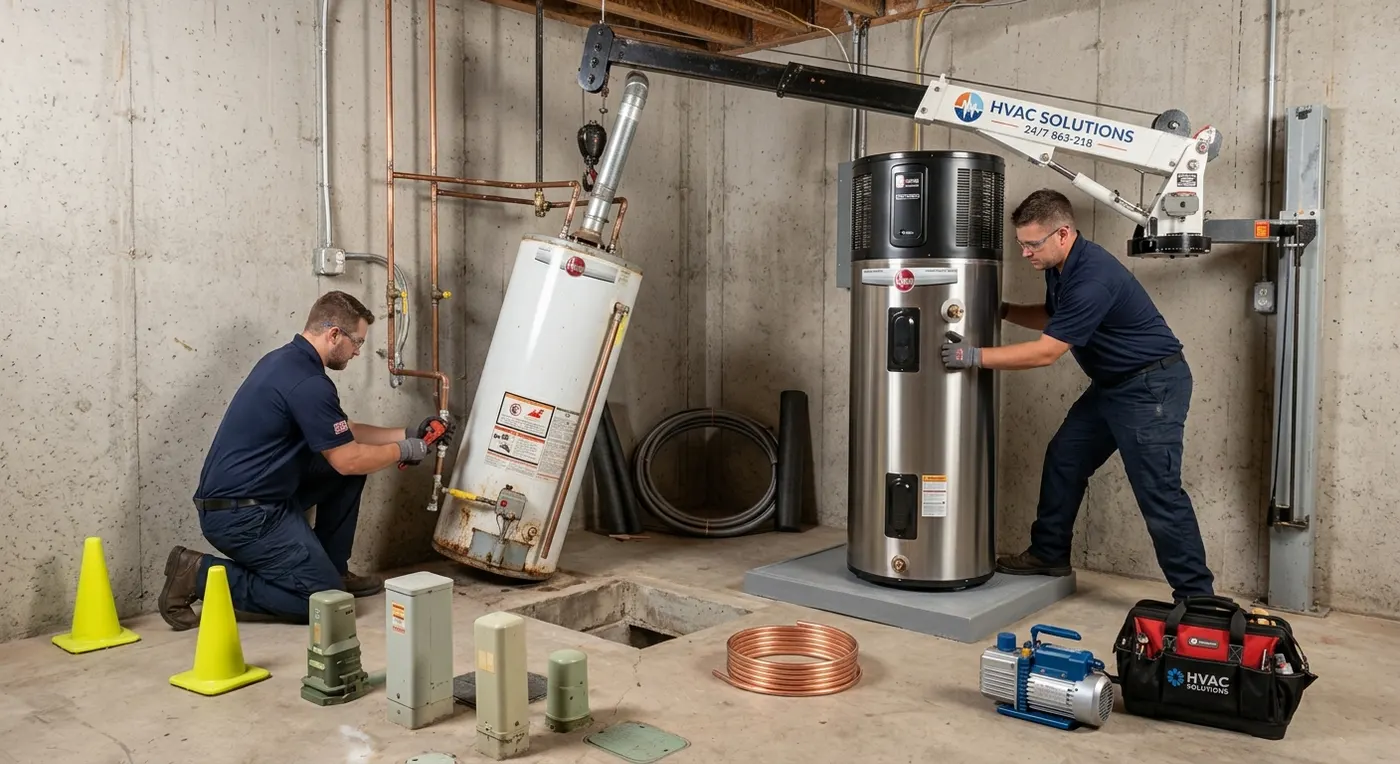
Most homeowners can expect to pay $1,300–$4,200 to replace a water heater. A like-for-like tank swap sits at the low end; a tankless unit or a fuel-type conversion sits at the high end.
Cost by project size
| Project size | Typical range |
|---|---|
Standard tank (40–50 gal) | $1,300–$2,200 |
High-efficiency tank | $1,800–$2,800 |
Tankless (gas or electric) | $2,800–$4,200 |
Cost by material
| Material | Typical range |
|---|---|
Electric tank | $1,300–$2,200 |
Gas tank | $1,500–$2,500 |
Tankless gas | $2,800–$4,200 |
Labor cost
Labor typically accounts for 35–55% of the total project cost. Labor share rises sharply for tankless conversions and any job requiring new venting or a gas line change.
Regional considerations
Permit requirements and code-mandated upgrades (seismic strapping, expansion tanks) vary significantly by jurisdiction and add to the total.
Resale value
Water heater replacement isn't tracked in resale-value studies the way remodeling, roofing, or major systems are — a working water heater is generally treated by buyers and appraisers as a baseline expectation rather than a value-add. The financial risk runs the other way: a visibly old, leaking, or undersized unit is a common home-inspection callout, and negotiating a credit for it at sale is often costlier than replacing it beforehand.
What affects the price
- Tank vs. tankless
- Tankless units cost more to install but take up less space and can lower long-run operating costs, especially for larger households.
- Fuel type conversion
- Switching from electric to gas (or vice versa) requires new venting or wiring and adds meaningfully to labor cost.
- Code-required upgrades
- An expansion tank, seismic strapping, or updated venting may be required to bring an older installation up to current code.
- Access and location
- A unit in a tight crawlspace or attic takes longer to remove and install than one in an open basement or garage.
Repair vs. replace
A leaking tank or a unit past 8–12 years old is generally worth replacing rather than repairing. A pilot light, thermostat, or heating element issue on a newer unit is usually a repair.
DIY vs. professional
Gas line and venting work should always go to a licensed plumber — most jurisdictions require it by code, and mistakes here carry real safety risk.
Ways to reduce costs
- Choose a like-for-like replacement to avoid code-upgrade costs
- Compare total cost of ownership for tank vs. tankless, not just install price
- Ask about utility rebates for high-efficiency units
- Bundle the replacement with other plumbing work if you're already having a plumber out
- Get a written quote that includes removal and disposal of the old unit
Financing options
Because water heater replacement is a smaller, more urgent expense than a remodel, most homeowners pay out of pocket or use a low-limit 0% promotional card. Plumbing companies increasingly offer short-term in-house financing for tankless conversions given their higher upfront cost; opening a HELOC is rarely worth it for this project alone unless it's bundled with other work.
Questions to ask contractors
- Is a permit required for this replacement, and is it included in your quote?
- Are there any code-required upgrades needed for my current setup?
- What's the warranty on the tank itself versus your installation labor?
- Is removal and disposal of the old unit included?
- If I'm considering tankless, have you sized it to my household's peak demand (GPM)?
Project timeline
1. Like-for-like tank swap
Same day, typically a few hours
2. Tankless conversion or venting/gas line change
1–3 days
Maintenance considerations
Flush the tank annually to clear sediment, check the anode rod every 2–3 years, and test the temperature-pressure relief (TPR) valve once a year.
Methodology & sources
These figures come from our published cost estimation methodology, cross-referenced against the sources below. They are estimates, not quotes — actual project costs vary by location, materials, labor, and contractor.
- U.S. Energy Information Administration — Residential Energy Consumption Survey
- U.S. Bureau of Labor Statistics — Producer Price Index, construction materials
Frequently asked questions
Is tankless worth the extra upfront cost?+
It depends on household size and usage patterns. Tankless units cost more to install but can lower energy bills and last longer — the payback period varies widely by household.
How long does water heater replacement take?+
A straightforward like-for-like tank replacement usually takes a few hours. Converting to tankless or changing fuel types typically takes a full day or more.
Do I need a permit to replace a water heater?+
Many jurisdictions require a permit for water heater replacement, particularly for gas units or any venting changes. A licensed plumber will know your local requirement.
Does a new water heater affect resale value?+
Not directly — it's treated as a baseline expectation rather than a value-add. Where it matters is inspection: a visibly old, leaking, or undersized unit is a common callout, and it's usually cheaper to replace it before listing than to negotiate a credit for it during the sale.
Water Heater Replacement by size and type
Looking for a narrower scope? These pages break out cost for a specific size or type covered by this guide.